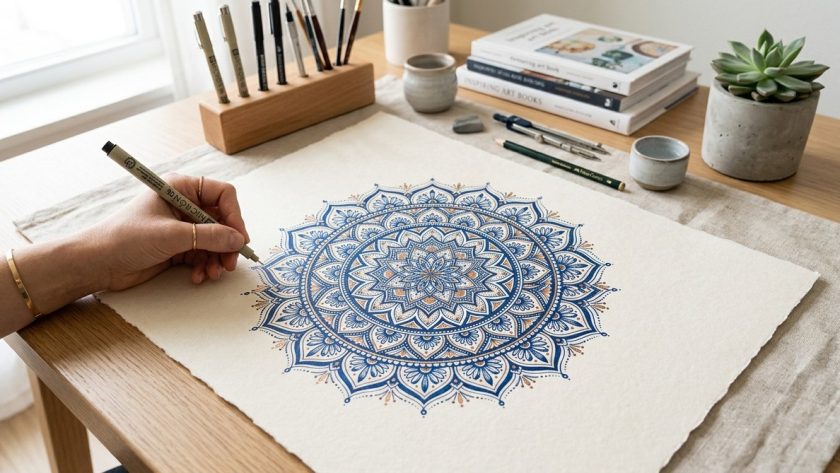
Mandalas are more than pretty circles. They are portals to meaning, memory, and creative focus. At SerinaErFjord.com we explore how mandala art sits at the crossroads of folk traditions, spiritual practice, and contemporary creativity. Whether you are drawing by hand on paper, composing with color in a digital canvas, or contemplating the mandala as a meditative practice, this guide offers ideas you can apply right away. Expect clear steps, thoughtful insights, and practical tips that honor both tradition and modern experimentation.
What is a Mandala?
A mandala is a circular design that centers on balance, unity, and repetition. The word mandala comes from a Sanskrit term that translates roughly to circle or disk and conveys the idea of wholeness and cycles. In many traditions the mandala acts as a map of the cosmos, a tool for meditation, or a ceremonial form of expression. The circle is not just a shape; it is a language that communicates order, rhythm, and intention.
In everyday art practice a mandala may begin with a simple circle and expand outward with symmetrical motifs. Its power often lies in its midline stability: a steady center from which patterns radiate in precise, mirrored fashion. The discipline of creating a mandala can calm the mind, sharpen focus, and invite a sense of presence that translates into all kinds of creative work.
A Brief History of Mandalas
Mandalas have deep roots in multiple cultural streams, particularly in Hindu and Buddhist contexts. They appear in temple iconography, ritual drawings, and meditative practices that date back many centuries. In Hindu contexts, mandalas can be linked to yantras and sacred diagrams used in devotion, ceremonies, and temple art. In Buddhist traditions, mandalas serve as meditative tools that symbolize the cosmos and reflect the stages of enlightenment.
Tibetan Buddhism adds a dramatic chapter with the famous sand mandalas. Monks labor over intricate designs using colored sand, a practice that emphasizes impermanence as the finished work is ceremonially destroyed to symbolize the transient nature of life. Western art has embraced mandalas as a form of personal expression, spiritual inquiry, and therapeutic practice, blending traditional symbolism with contemporary aesthetics and digital tools.
This history reminds us that mandalas are not relics of the past but living, evolving forms. They travel across cultures and into modern studios, classrooms, and mindfulness spaces, where they continue to inspire creativity and contemplation.
Types of Mandalas
Mandalas come in many shapes, scales, and purposes. Here are some common formats you might encounter or choose to create:
- Geometric mandalas: Central point with a series of geometric shapes arranged in concentric rings. This is a classic approach that emphasizes symmetry and balance.
- Circle prayers and ritual mandalas: Designs used in devotional contexts, often featuring sacred symbols, mantras, or iconography specific to a tradition.
- Yantra mandalas: Derived from Hindu practice, these mandalas combine geometric precision with spiritual symbolism and are sometimes used in meditation or ritual.
- Sand mandalas: Intricate and colorful, built layer by layer with care, then dismantled to symbolize impermanence.
- Painted, drawn, and colored mandalas: Accessible formats that range from simple doodles to complex, highly detailed artworks.
- Digital mandalas: Created on tablets or computers using vector or raster software, allowing for precise symmetry and easy experimentation with color and texture.
Each type has its own mood, technique, and cultural resonance. Your choice can reflect your intention, whether you seek meditative focus, decorative design, or symbolic storytelling.
Symbolism in Mandalas
The power of a mandala often rests in its symbolism. Core ideas to consider as you design or interpret mandalas include:
- The circle: A symbol of unity, infinity, and cycles. It has no beginning or end, representing wholeness and the interconnectedness of all things.
- The center: The point of focus or origin, often signifying the self, the divine, or a creative spark.
- Radial symmetry: Patterns emerge from the center outward, echoing balance, order, and harmony.
- Layers and rings: Each ring can represent different aspects of life, time, or spiritual progression.
- Colors: Colors carry cultural and personal meanings. For example, warm tones can evoke vitality and warmth, while cool tones suggest calm and contemplation. Across traditions, color symbolism can vary, so your intent and audience may guide your palette.
- Motifs: Floral petals, sacred symbols, animals, or geometric shapes can carry additional layers of meaning, connecting the viewer to cultural stories or personal associations.
When interpreting a mandala, look for how the central motif interacts with surrounding rings, what the color choices imply, and how the overall composition guides your eye. If you are creating, decide on a symbolic map first, then let the visuals unfold in a way that honors that map.
Mandalas in Spiritual and Healing Practices
Mandalas are widely associated with mindfulness and healing practices for good reasons. They offer a structured yet flexible framework for concentration and self inquiry. Reasons people turn to mandalas for healing include:
- Focus and calm: The repetitive, centering action of drawing a mandala can quiet a busy mind.
- Self discovery: The process of choosing colors and shapes can reveal subconscious themes and desires.
- Emotional regulation: The act of completion provides a sense of accomplishment and stability.
- Creative therapy: In art therapy settings, mandalas help clients express feelings safely and visually.
- Cultural connection: For many, mandalas connect to cultural heritage, spiritual practice, or community rituals.
If you are using mandalas in a therapeutic context, consider keeping a reflection journal to record phrases, emotions, or insights that arise during the process. This practice can deepen the meaning you find in the artwork and support personal growth.
Creating Mandalas: Traditional Techniques
Whether you are drawing by hand with pencils and markers or painting with brush and ink, traditional mandala work shares a common core: planning, symmetry, and deliberate rhythm. Here is a practical framework to help you begin.
Tools and Materials
- A sturdy drawing surface: sketchbook, layout paper, or canvas.
- A compass and a ruler: for accurate circles and straight lines.
- A protractor or a grid system: to create even angles and rings.
- Pencils and erasers: for initial layout and corrections.
- Fine liners or ink pens: for precise outlines.
- Coloring materials: colored pencils, markers, gouache, acrylics, or watercolors.
- Optional: stencils or stamps for repeating motifs.
- Optional digital version: a drawing tablet with vector software or raster editors.
Step by Step: Drawing a Mandala by Hand
- Set your intention: Spend a moment focusing on what you want your mandala to express.
- Draw the central point: Lightly made with a dot or small circle at the center.
- Create concentric rings: Use a compass to draw several evenly spaced rings.
- Establish a construction grid: Lightly sketch a cross, diagonals, or radial lines to guide symmetry.
- Plan a motif system: Decide on a set of motifs that repeat or rotate around the center.
- Draw the outlines: Start with larger shapes near the center and work outward, maintaining symmetry.
- Add details and rhythm: Introduce smaller motifs, fine lines, and texture.
- Color with intention: Choose a palette that supports the mood you want to convey.
- Clean and preserve: If you wish, go over lines with ink and erase construction marks.
- Reflect: Take a moment to observe the finished piece and consider its meaning.
Composition and Symmetry Rules
- Maintain a clear center: Everything radiates from the middle; your eye should travel outward smoothly.
- Use a consistent rhythm: Even spacing and recurring motifs create harmony.
- Balance color and form: Alternate warm and cool tones to keep the composition dynamic.
- Allow for breathing room: Negative space helps the design breathe and prevents visual overload.
Digital and AI Generated Mandalas
Digital tools open exciting possibilities for mandala art. You can sketch, refine, and experiment with layers, gradients, and textures with speed and precision. Here are some practical approaches:
- Start with a precise grid: Use vector software to create perfect circles and lines, ensuring flawless symmetry.
- Use symmetry features: Most design programs offer mirror or rotational symmetry options that simplify complex patterns.
- Layer aesthetics: Build multiple layers for base shapes, line work, color fields, and textures so you can adjust easily.
- Explore color dynamics: Try gradient fills, transparency, and blend modes to create luminous effects.
- Experiment with AI tools: Let an AI engine suggest motif combinations or color schemes, then refine by hand to preserve your personal voice.
- Preserve tradition with modern methods: You can combine classic motifs and sacred geometry with contemporary palettes or digital textures for fresh resonance.
If you integrate digital methods with traditional intention, you retain the mandala’s focus while expanding its expressive range. Remember to credit sources and maintain ethical practices when using AI assistance.
Color Theory and Meaning
Color is a language in itself when you make mandalas. The choice of color can influence mood, symbolism, and reader response. Consider these ideas as you build your palette:
- Warm colors (reds, oranges, yellows) evoke energy, vitality, and warmth. They can draw attention to the center or radiate outward for emphasis.
- Cool colors (blues, greens, purples) convey calm, balance, and serenity. They are effective for grounding the composition.
- Monochrome schemes offer a focused, meditative feel and highlight line work and texture.
- Complementary pairs create visual tension that can symbolize dynamic balance or duality.
- Cultural color associations vary. If your audience includes people from diverse backgrounds, provide a short note or visual cue to explain your color choices.
Experiment with color rules but also listen to your intuition. The best mandala colors often emerge from a dialogue between intention and aesthetic taste.
Cultural Contexts: Hinduism, Buddhism, Tibetan Sand Mandalas
Understanding the cultural heritage behind mandalas deepens both practice and appreciation. In Hindu traditions, mandalas are sometimes used within rituals and devotional practices, connecting practitioners with deities and cosmic order. In Buddhist contexts, mandalas symbolize the universe and the path toward enlightenment, with geometrics and icons that map spiritual steps. The Tibetan sand mandala is perhaps the most dramatic example of impermanence in art, where a completed piece is ceremonially dismantled to reflect the transience of existence.
When engaging with mandalas from different traditions, approach the subject with respect and curiosity. Researchers, students, and artists alike can honor these practices by studying authentic motifs, learning about rituals from credible sources, and avoiding cultural appropriation. If you are creating modern interpretations, consider citing sources, inviting community perspectives, or blending universal symbols in ways that celebrate shared human storytelling.
Mandalas in Modern Art and Everyday Life
Mandalas have become a versatile motif in contemporary culture. You can encounter them in:
- Home decor: wall art, textiles, and ceramics that bring a sense of calm and balance to a space.
- Fashion and tattoos: circular motifs and radiant patterns that convey personal meaning.
- Graphic design and branding: mandala inspired logos and packaging that communicate harmony and unity.
- Education and community spaces: classroom visuals, mindfulness corners, and creative workshops.
- Digital media: app icons, user interfaces, and digital art exhibits that blend tradition with technology.
As a result, mandalas can coexist with modern aesthetics while preserving their contemplative function. The key is to retain the sense of rhythm and center that gives mandalas their unique pull.
Interpreting Your Mandala
Interpreting a mandala can be as personal as the act of drawing it. If you want to glean deeper meaning from your own work or someone else’s, try this approach:
- Start with the center: Ask what the core symbol represents and how it relates to your current life.
- Read the rings: Consider what each successive ring might signify—time, relationships, goals, beliefs.
- Observe the color story: Identify which colors dominate and how they make you feel.
- Reflect on the rhythm: Notice the pace and repetition of motifs. Do they feel restful or energizing?
- Journal and correlate: Write down sensations, thoughts, or memories that emerge and see how they connect to the imagery.
- Discuss with others: Share interpretations (if you wish) to broaden your understanding and reveal new layers.
Remember that there is no single correct interpretation. A mandala is a living artifact, inviting multiple readings over time.
Mandalas as a Practice: Routine and Mindfulness
Integrating mandala making into a routine can offer steady benefits for focus, reflection, and creative stamina. A simple practice plan might include:
- 5 minute starter: A quick warm up sketch to center your attention.
- 15 minute build: Develop the main circular pattern with a consistent motif.
- 10 minute refinement: Add details, shading, or color layers.
- 5 minute reflection: Brief journaling about what the process revealed.
- Weekly themes: Assign a theme (growth, gratitude, resilience) and let it guide elements and colors.
Over time, you can adapt the duration and complexity to fit your schedule, mood, and goals. The important thing is showing up with curiosity and patience.
Getting Started: Projects for Beginners
If you are new to mandalas, here are approachable projects that build confidence while teaching core skills:
- Project 1: Centered circle and 3 rings
- Create a bold central motif.
- Add three concentric rings with repeating petal shapes.
- Color with a two tone palette to learn balance.
- Project 2: A personal symbol mandala
- Choose one personal symbol and expand it outward.
- Use a limited color set to practice harmony.
- Project 3: Digital mandala with symmetry
- Draw a basic mandala on paper, scan it, and recreate in vector software using symmetry tools.
- Experiment with gradients and soft light textures.
- Project 4: Minimalist mandala
- Focus on negative space and clean line work.
- Use a black white palette to emphasize form.
Each project reinforces precise drawing, rhythm, and color literacy while letting you discover your own creative voice.
FAQs
- What is a mandala in simple terms?
-
A mandala is a circular design that centers on balance and wholeness, often radiating outward from a focal point.
-
Are mandalas only for spiritual people?
-
No. Mandalas appeal to a wide range of people for meditation, design, and personal expression, regardless of religious beliefs.
-
Can I make a mandala without special tools?
-
Absolutely. You can begin with a pencil, paper, and a compass or circular object to trace circles.
-
How long does it take to finish a mandala?
-
It depends on complexity. A simple mandala can take 20 to 40 minutes, while a highly detailed piece can take several hours or more across multiple sessions.
-
What is the best medium for beginners?
- Pencil and paper are excellent starting points. Once comfortable, you can move to colored pencils, markers, or digital tools.
Further Resources
- Introductory books on mandalas that cover history and practice.
- Online tutorials and courses focusing on both traditional drawing and digital methods.
- Museums and cultural institutions offering exhibitions of mandalas, yantras, and related ritual art.
- Community workshops and mindful art spaces that incorporate mandala projects into group sessions.
SerinaErFjord.com invites you to explore mandala art through a lens that blends folk tradition with modern technique. This site celebrates the ways mandalas travel across digital media, literature, and cultural practice, bringing together artistry, spirituality, and thoughtful commentary. If you are curious about how mandalas can influence your creative workflow, your mindfulness practice, or your understanding of cultural arts, you are in the right place.
Whether you are drawn to the spiritual symbolism of mandalas, inspired by the clean geometry of geometric designs, or excited by the possibilities of AI assisted art, there is a path for you. Start with a simple circle and a single motif, then let your practice unfold—one circle, one ring, one hue at a time.